

Home Beer Tap System: How to Choose and Install
Posted by Ron on 13th Oct 2026
A home beer tap system needs a way to keep the keg cold, a compatible keg connection and a balanced dispensing line. For everyday home use, a kegerator provides refrigerated keg storage and can be fitted with compatible dispensing equipment. A jockey box or flash chiller cools beer only while it pours, so it suits parties and events but does not replace a refrigerator for keg storage.
Before you buy anything, measure the space and decide how many beers you want on tap. Available space and the number of taps determine cabinet capacity; the keg valve determines the connection.
Quick answer: For a permanent home bar, choose a kegerator, or a conversion kit if you already have a suitable fridge. For portable service, a jockey box or electric flash chiller works well. Match the coupler or disconnects to the keg you actually buy, keep the whole beer path cold, and set CO2 pressure to the beer temperature and carbonation level rather than to a fixed number.
Which Home Beer Tap System Should You Choose?
| System | Best for | How it cools the beer | What to check first |
|---|---|---|---|
| Kegerator | A permanent home bar with regular pouring | Refrigerates the keg inside the cabinet | Keg capacity, included parts, freestanding or built-in rating |
| Converted fridge or keezer | DIY builds using a fridge or chest freezer you already own | Refrigerates the keg; a keezer needs an external temperature controller | Interior space and a safe spot to drill |
| Jockey box | Backyard parties, tailgates, events | Beer runs through an ice-cooled coil or cold plate | Ice supply and somewhere cold to store the keg between uses |
| Electric flash chiller | Portable pouring where there is power | Cools beer as it passes through the unit, no ice | Power requirements and time to reach operating temperature |
For a closer look at the trade-offs, see our comparison of a jockey box vs. kegerator vs. keezer.
When Is a Kegerator the Right Choice?

A kegerator makes sense if a keg will sit on tap for days or weeks. The keg stays cold between pours, so there is nothing to move or re-chill after a party.
Read the spec sheet before ordering. Some models ship complete with a tower, faucet, coupler and CO2 regulator, while others are cabinet-only and need the dispensing parts bought separately. If you are deciding between one and two faucets, our single vs. dual-tap kegerator guide covers the differences.
Can You Build a DIY Home Beer Tap?
Yes. A fridge with enough room for a keg can be converted with a kegerator conversion kit. A door-mounted faucet goes through the door on a shank. A tower needs a solid top surface and a suitable cooling arrangement for the beer line inside the tower. Our step-by-step guide to making your own keg fridge at home walks through the build.
A chest freezer conversion (a keezer) can fit several kegs, depending on the freezer and the keg sizes. It runs far too cold on its own, so it needs an external temperature controller. Think about how you will lift a full keg over the freezer wall before you commit to one.
Before drilling: Refrigerant lines and wiring often run through doors, side walls and tops. Check the appliance manual or ask the manufacturer where it is safe to drill. Drilling into a refrigerant line or wiring can damage the appliance.
When Should You Use a Jockey Box or Flash Chiller?

A jockey box chills beer on its way to the faucet using ice packed around a stainless coil or cold plate. Coil and cold-plate boxes are set up differently, so follow the instructions for your model. The keg itself is not refrigerated.

An electric flash chiller does the same job without ice. Let it reach operating temperature before the first pour, and check which coupler and gas supply the model expects.
With either one, store the keg cold between events. Set the gas pressure according to the model's instructions, since the beer has to travel through the cooling coil or plate before it reaches the faucet.
What Should You Check Before Buying a Home Bar Beer Tap System?
- Keg dimensions: Measure the usable interior, including any compressor hump. Leave room above the keg for the coupler and enough slack for tubing to bend without kinking.
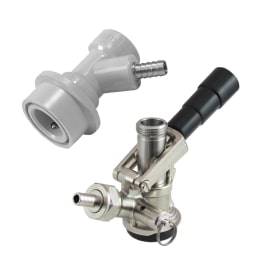
- Keg connection: Commercial kegs use couplers. Cornelius kegs use separate gas and liquid disconnects. The two are not interchangeable.
- Number of beers: Make sure the cabinet fits the kegs you want together, and that you have a separate line and faucet for each.
- Installation type: Under-counter installs need a model rated for built-in use. Enclosing a freestanding unit without the required ventilation can impair cooling and cause overheating.
- Distance to the faucet: A short direct-draw setup is much simpler than a remote faucet with a long beer line, which needs its own cooling and balancing.
- CO2 tank position: The tank must stand upright and be secured, with the valve and regulator easy to reach.
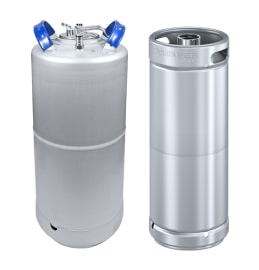
A common Cornelius keg size is 5 US gallons (about 18.9 L). A sixth-barrel commercial keg holds about 5.16 US gallons (about 19.5 L). The volumes are close, but the dimensions and fittings are not. Our beer keg sizes guide lists dimensions for each type.
What Equipment Do You Need for Beer on Tap at Home?
Here is what a typical CO2 home draft setup includes. Compare it against what already comes with your kegerator or kit, so you only buy what is missing.
- Refrigeration: A kegerator or converted fridge to keep the keg cold.
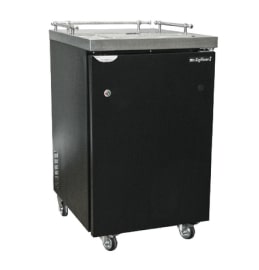
- Beer keg: A commercial keg from the brewery or distributor, or a stainless steel keg if you fill your own.
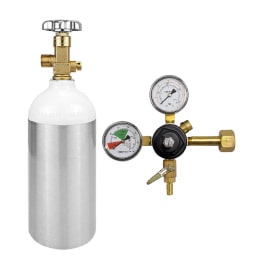
- CO2 tank and regulator: A gas tank sized for your space and a CO2 regulator that fits the tank valve and covers your working pressure. Check whether the tank is supplied empty and arrange a suitable CO2 fill before use.
- Keg connection: A keg coupler for commercial kegs, or ball-lock or pin-lock disconnects for Cornelius kegs.
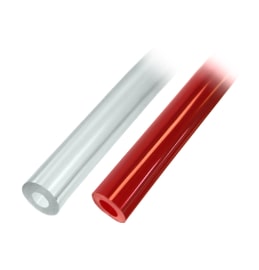
- Beer and gas lines: Beer tubing and gas line in the right inside diameter for your fittings.
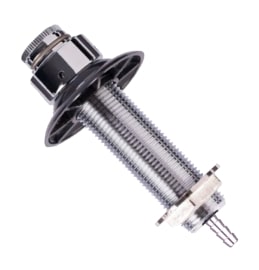
- Faucet and mounting: A beer faucet and shank.
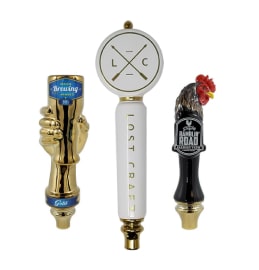
- Tap handle: A tap handle that threads onto the faucet lever, in a standard or custom design.
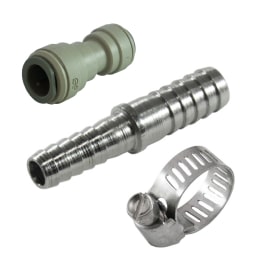
- Connection hardware: Washers, fittings and clamps as specified for each connection.
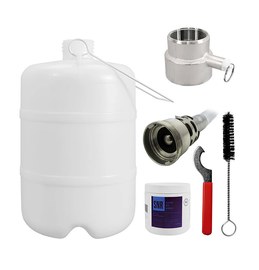
- Cleaning kit: Beer line cleaning equipment and a line cleaner made for draft systems.
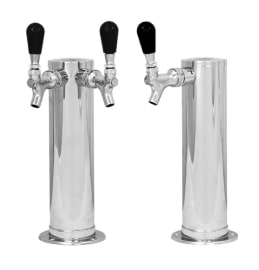
You only need a beer tower if the faucet sits on top of the cabinet. Check whether the tower comes with shanks, faucets and tubing already installed. A drip tray beneath the faucet collects spills.
Which Keg Coupler Do You Need?
Common commercial keg coupler systems include D, S, U, A, G and M. D-type is the most common in Canada and the USA, but the keg valve decides, not the beer brand. Ask the brewery or distributor which coupler their kegs take.
Cornelius kegs come with either ball-lock or pin-lock posts, and each needs matching disconnects. KeyKegs use their own connector. Our keg coupler types guide shows how to tell them apart.
Do Multiple Taps Need Separate Regulators?
Not always. If every beer pours well at the same pressure, one regulator and a gas distributor are enough. A distributor splits the gas but cannot set a different pressure for each keg.
If the beers need different pressures, add secondary gas regulators after the primary regulator. A secondary regulator is built for low inlet pressure and must never be connected straight to a CO2 tank.
Beer Tap Installation at Home: Step by Step
These steps cover a typical direct-draw CO2 setup. Where your equipment manual says something different, follow the manual.
Leave the ventilation clearance the manufacturer specifies. Dry-fit the keg, CO2 tank and tubing to make sure nothing gets pinched when the door closes.
Install the tower or door shank, then attach the faucet with a faucet wrench. On a tower setup, plan how the line inside the tower will stay cold. A warm tower can cause a foamy first pour even when the keg is cold.
Clean and sanitize the beer line, coupler and faucet before first use. Follow the cleaner's dilution and rinse instructions.
Keep the tank valve and the regulator shutoff closed. Secure the tank upright, attach the regulator using the seal and tightening method its manufacturer specifies, and run the gas line to the coupler's gas inlet or the keg's gas disconnect.
Run the beer line from the coupler outlet or liquid disconnect to the shank. Secure each connection with the specified fittings or clamps, and keep the faucet closed.
For a commercial keg, keep the coupler disengaged while seating and locking it onto the keg valve, then engage it according to the manufacturer's instructions. Some couplers twist into place; others slide on. For a Cornelius keg, fit the matching gas and liquid disconnects to their respective posts.
Open the tank valve, set the serving pressure and open the regulator shutoff. Spray every gas joint with soapy water or leak-detection solution. Bubbles mean a leak: close the gas and fix it before going further.
Give the keg time to reach serving temperature, which can take a day for a keg that arrived warm. Open the faucet all the way for the test pour. If the pour is foamy or slow, check beer temperature, operating pressure and line balance together.
Keep the CO2 tank in a ventilated space. Never remove the valve from a commercial keg, and never connect a CO2 tank to a keg without a regulator in between. For more detail on the coupler itself, see how to tap a keg.
A ready-made kegerator can often be set up at home by following the manufacturer's instructions. Fridge conversions, built-in bars and long remote lines may call for a qualified draft technician.
What Temperature and CO2 Pressure Should You Use?
For most direct-draw systems, 36-38°F (2-3°C) is a good starting point for beer temperature. If the brewery recommends something else, use that. Keep in mind that the kegerator display shows air temperature, and a freshly loaded keg can stay warmer inside for many hours.
Serving pressure of 10-15 PSI is typical for a cold, balanced direct-draw system. The right number depends on beer temperature and how carbonated the brewery wants the beer. Use the brewery's guidance or a CO2 pressure and temperature chart instead of picking a pressure by beer style alone.
The beer line has to provide enough resistance to match that pressure. Inside diameter, material, length and the height of the faucet above the keg all play a part, so there is no single correct line length for every home setup.
Nitro beers are a separate case. They need a nitrogen and CO2 blend, a matching regulator and a stout faucet, and their pressure settings do not carry over to regular CO2 beer.
What If the First Pour Is Foamy?
Start with temperature. A warm tower or a keg that has not fully chilled can cause foamy pours. If the beer is cold, check the tubing for kinks next. A beer line that is too short for the pressure will also pour fast and foamy.
Always open the faucet all the way. If the pressure is set below what the beer needs to hold its carbonation, CO2 comes out of the beer and the foam usually gets worse over the following days. Our guide to foamy kegerator beer covers each cause.
How Do You Keep a Home Draft Beer System Clean?
Clean the beer lines every two weeks, and take the faucet and coupler apart for cleaning on the same schedule. Flushing with water alone does not remove beer stone or bacteria.
Use a cleaner made for draft lines and rinse it out fully before reconnecting the keg. Cleaning day is also a good time to check washers, O-rings and tubing for wear.
Continuous refrigeration and appropriate dispensing gas help preserve beer within the brewery's freshness window. As a general guide, unpasteurized beer lasts about 45-60 days and pasteurized beer about 90-120 days, sometimes longer. Those windows start from the day the brewery filled the keg, not the day you tapped it. More detail is in how long a keg stays fresh in a kegerator.
Where Can You Buy Home Beer Tap Equipment?
BeverageCraft ships kegerators, conversion kits and draft beer parts across Canada and the USA. Product pages list what is included, so you can identify any additional components your installation requires before you order.
Not sure which parts fit together? Email sales@beveragecraft.com with your keg type, the number of taps you want, where the system will go and any equipment you already have. Add your delivery address if you would like a quote.

Frequently Asked Questions
Can I install a beer tap in an existing refrigerator?
Do I need a professional for beer tap installation?
Can a freestanding kegerator go under a countertop?
Does a two-tap system let me serve two different beers?
Can I use a jockey box instead of a kegerator at home?
You May Also Be Interested In