
How to Tap a Keg: Step-by-Step Guide & Equipment You Need
Posted by Ron on 5th Oct 2026
To tap a keg, chill the beer, choose a coupler that fits the keg valve, connect your equipment and engage the coupler. The details depend on whether you are using a hand pump, a jockey box or a kegerator. This guide covers the basic connection sequence and the differences between each setup.
Which Keg Tapping Method Should You Use?
| Method | Best for | Equipment needed | Freshness and storage |
|---|---|---|---|
| Hand pump | Short parties without power or CO2 | Party pump with a compatible coupler | Air enters the keg. Finish the beer the same day for best flavour; keep the keg cold. |
| Jockey box | Events, catering and outdoor service | Jockey box, compatible coupler, beer and gas lines, CO2 tank, regulator and ice | Designed for event dispensing. CO2 avoids introducing air, but the box does not refrigerate the keg during storage. |
| Kegerator | Home or bar use with refrigerated storage | Kegerator or conversion kit, compatible coupler and CO2 equipment | Keeps the keg refrigerated. Follow the brewery’s freshness date and storage recommendations. |
What Equipment Do You Need to Tap a Keg?
For a commercial keg with a standard coupler connection, you need a compatible keg coupler, a dispensing hose or beer line, and a faucet. A hand pump supplies air manually; a CO2 setup also needs a gas tank, a matching primary regulator, gas tubing and secure fittings. A jockey box adds a cooling coil or cold plate; a kegerator keeps the whole keg refrigerated.
Common commercial coupler systems include D, S, U, A, G and M. Choose by the valve fitted to the actual keg, using the beer brand only as a starting point. Confirm the connection with the brewery or distributor, or use our keg coupler types guide. Cornelius ball-lock kegs and KeyKegs use different connections and are outside the standard coupler instructions below.
How Do You Put a Tap on a Keg?
The following sequence applies to a standard commercial keg coupler. Follow the instructions supplied with your particular coupler and dispensing equipment.
-
Chill and position the keg.
Keep it upright and cool the beer itself to its recommended serving temperature. For many standard draft systems, 36–38°F (2–3°C) is a practical starting point. Let a keg settle after transport.
-
Prepare clean equipment.
Remove the protective keg cap, leaving the keg valve in place. Clean the valve contact area and use properly cleaned and sanitised couplers, beer lines and faucets. Wiping the outside does not replace cleaning the beer-contact parts.
-
Connect the lines with gas off.
For CO2 systems, close the tank valve and regulator outlet shutoff before assembly. Attach the regulator as its manufacturer directs, connect the gas line to the coupler’s gas inlet and connect the beer line to the beer outlet. Secure the specified fittings and clamps, and keep the faucet closed. A party pump normally includes its own dispensing hose and faucet.
-
Secure the coupler while disengaged.
Keep the coupler handle in its untapped position. Seat and lock the coupler onto the keg valve using the mechanism for that coupler type. Do not force a mismatched connection: some systems twist into place, while others slide on.
-
Engage the coupler.
Activate its handle according to the manufacturer’s instructions to open the keg valve. On a common lever-handle D-type coupler, pull the handle outward and push it down. This is separate from opening the dispensing faucet.
-
Supply pressure and pour.
For a CO2 setup, slowly open the tank valve, set the regulator to the appropriate operating pressure and open the outlet shutoff according to the equipment instructions. Check connections with a suitable leak-detection solution. For a hand pump, first try pouring using the keg’s existing pressure. Open the faucet fully into a tilted glass; pump only if the flow slows.
How Do You Tap a Keg With a Hand Pump?
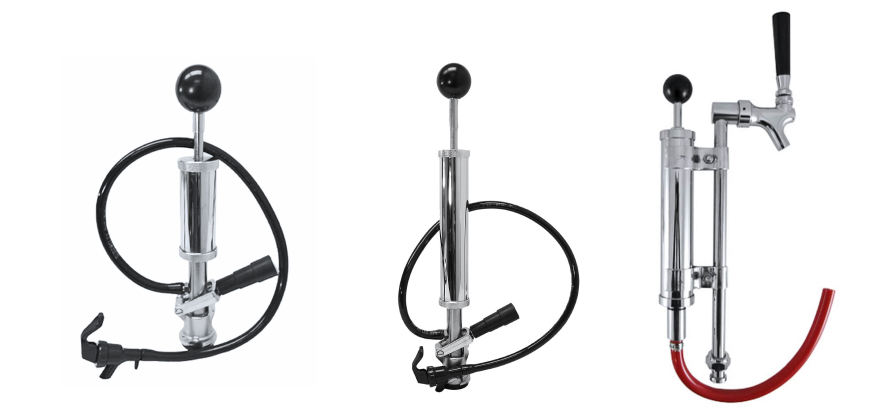
A hand pump is useful for a short gathering without CO2 or electricity. Use the connection sequence above, making sure the pump’s coupler fits the keg valve.
-
Pour before pumping.
Once the coupler is engaged, open the faucet fully and try dispensing with the pressure already inside the keg. The first pour may contain some foam.
-
Pump only when needed.
If the flow slows, add a few pump strokes and try again. Over-pumping creates excess pressure and foam. Keep the keg, hose and faucet out of direct sunlight.
-
Finish the keg the same day.
A hand pump introduces air, which shortens the beer’s useful freshness period. Switching to CO2 later does not reverse exposure to air.
How Do You Tap a Keg With a Jockey Box?

A jockey box cools beer as it travels through a coil or cold plate. It does not refrigerate the keg itself, so keep the keg cool and shaded during service and return it to refrigerated storage afterwards.
-
Identify the cooling system.
Follow the box’s setup instructions. Coil systems generally use an ice-water bath surrounding the coils; cold plates need direct contact with ice and usually require meltwater drainage. Do not apply coil instructions to a cold-plate box.
-
Connect and prepare before chilling.
With the gas off, connect the keg coupler, gas line and beer line to the box. Follow the manufacturer’s flushing and startup sequence; residual cleaning water in a coil can freeze if chilled before being displaced.
-
Use the box’s specified dispensing pressure.
A jockey box needs enough pressure to move beer through its cooling circuit. Use the pressure specified for your box and coil length; a kegerator’s usual setting may be too low. Check the recommended operating range before turning up the regulator.
-
Cool the circuit and test the pour.
Add ice and water or ice alone as appropriate for your model, allow the cooling system to reach its operating condition and test the flow. Keep replenishing ice during service. Event dispensing settings should not be treated as long-term storage pressure.
How Do You Tap a Keg With a Kegerator?
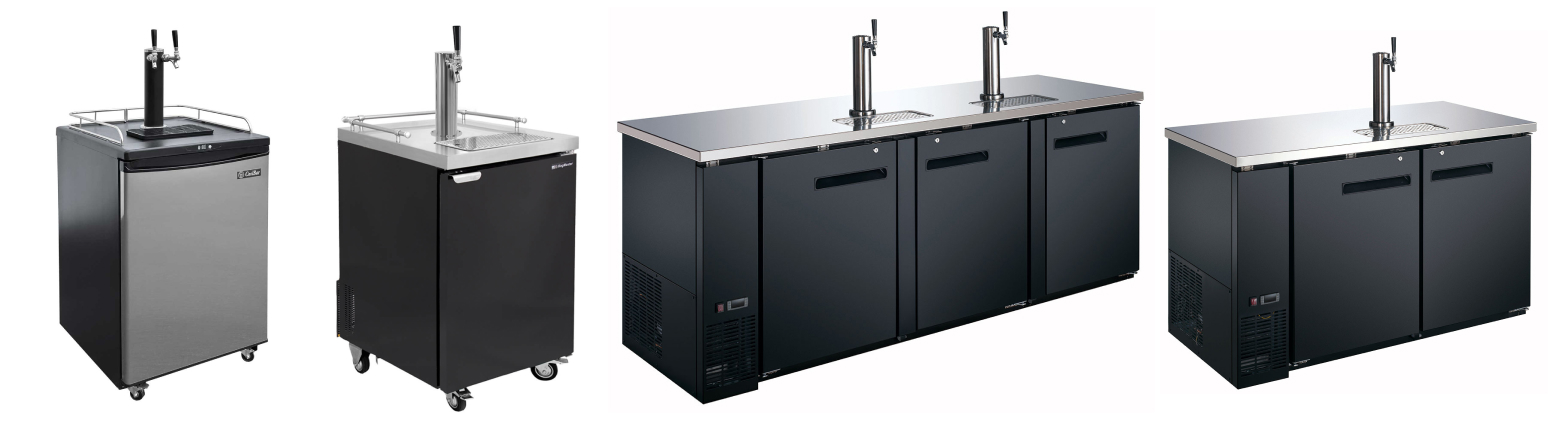
Place the keg inside the refrigerated cabinet, allow the beer to cool, and use the basic connection sequence above. Keep the beer line and faucet path cold as well as the keg. For tank installation and a complete setup walkthrough, see our guide to hooking up a keg to a kegerator.
A serving pressure around 10–15 PSI is common for many cold, balanced direct-draw systems, but it is only a starting point. Use the brewery’s carbonation guidance and a pressure-temperature chart to choose the correct setting, then balance the line resistance for that pressure.
How Do You Set Up a Keg With CO2?
Use the basic connection sequence above: assemble the gas and beer lines with the gas off, secure and engage the coupler, then supply regulated gas and check for leaks.
- Keep the gas tank upright and secured, and use it in a ventilated area.
- Use a primary regulator that matches the gas and tank connection. CGA-320 is common for CO2 tanks in Canada and the USA, but confirm the actual fitting.
- Follow the regulator’s sealing and tightening instructions. Some fittings are designed for hand tightening; others require a wrench. Do not assume every connection can be sealed by hand.
- Do not remove the keg valve or connect gas directly to an exposed keg opening.
What PSI Should You Use to Tap a Keg?
The correct pressure depends on beer temperature, its carbonation level and the dispensing system. Beer style alone is not enough to choose a reliable setting. Use the brewery’s target carbonation and a CO2 pressure-temperature chart for a direct-draw setup; follow the equipment instructions for a jockey box.
Nitro beers require the recommended nitrogen/CO2 blend, a compatible regulator and the appropriate dispensing faucet. Do not use a nitro system’s pressure as a setting for ordinary beer dispensed with pure CO2.
How Long Should a Keg Chill Before Tapping?
Judge readiness by the beer temperature, not only by the clock. A cold keg needs less preparation than a large keg that has warmed during transport. Several hours in a well-maintained ice bath may be sufficient; a large, warm keg can take substantially longer. In a kegerator, allow overnight or longer when needed. The cabinet reaching its set temperature does not mean the beer at the centre of the keg is cold.
Keep ice around the keg rather than only beneath it, and avoid moving or shaking it immediately before service. If the keg was transported, allow it to settle while chilling.
How Long Does a Tapped Keg Stay Fresh?
With a hand pump, aim to finish the beer the same day for best flavour. With CO2 and continuous refrigeration, general freshness estimates are about 45-60 days for unpasteurised beer and 90–120 days for pasteurised beer, but the brewery’s date and recommendations take priority. These are general total freshness windows, not guaranteed additional days after tapping. An older keg does not gain a new shelf life when connected.
A jockey box does not extend the keg’s storage life by itself. A partially used keg needs suitable refrigerated storage and appropriate gas pressure between events. Read our guide to how long a keg stays fresh in a kegerator.
How Do You Reduce Foam When Tapping a Keg?
If the first pour is foamy, check the setup before changing the pressure:
-
Check the beer and line temperature.
Warm beer or a warm faucet path can release CO2 before the beer reaches the glass. Cool the keg and dispensing circuit fully.
-
Open the faucet completely.
A partly opened faucet can create turbulence. With a hand pump, avoid adding pressure until the flow actually slows.
-
Check pressure and system balance together.
Confirm the regulator setting against the beer’s temperature and carbonation requirements. Both excessive and insufficient pressure can contribute to foam; low pressure can allow CO2 to break out in the line. Do not automatically lower pressure whenever beer foams.
-
Inspect the line and connections.
Check for dirty lines, kinks, inappropriate line resistance, damaged coupler seals and air entering the beer path. Correct the cause before adjusting pressure.
For more troubleshooting, see how to fix foamy kegerator beer.
Frequently Asked Questions
How do I know which keg coupler I need?
Match the coupler to the valve fitted to your actual keg. D, S, U, A, G and M are common commercial systems. Beer brand is a useful starting point, but confirm the valve with the brewery or distributor. Ball-lock kegs and KeyKegs need different connections.
Can I tap a keg without CO2?
Yes. A compatible hand pump uses air to dispense beer without CO2 or electricity. Once the coupler is engaged, try pouring with the keg’s existing pressure and pump only when the flow slows. Keep the keg cold and finish it the same day for best flavour.
Do I need to lower the coupler handle before pouring?
The coupler must be engaged to open the keg valve. For a common lever-handle D-type coupler, secure it with the handle disengaged, then pull the handle outward and push it down. Other designs may operate differently; follow your coupler’s instructions. The dispensing faucet is a separate control.
What PSI should I use to tap a keg?
For many cold, balanced direct-draw kegerators, 10-15 PSI is a common starting point. The correct setting depends on beer temperature and carbonation. Jockey boxes need pressure matched to their cooling circuit and manufacturer’s instructions; do not assume the kegerator setting applies.
How long should I chill a keg before tapping?
Chill until the beer itself reaches the recommended serving temperature. For many standard draft systems, 36-38°F (2-3°C) is a practical starting point. Several hours in an ice bath or overnight in a kegerator may be enough, but large or warm kegs can need longer.
How long does a keg stay fresh after tapping?
A keg tapped with a hand pump is best finished the same day. Under continuous refrigeration with CO2, general total freshness windows are about 45-60 days for unpasteurised beer and 90-120 days for pasteurised beer. These are not extra days guaranteed after tapping; follow the brewery’s freshness date.
Should I reduce CO2 pressure if the beer is foamy?
First check beer temperature, line cooling, cleanliness and system balance. Both excessive and insufficient pressure can contribute to foam. Adjust pressure only after confirming the beer’s temperature and carbonation requirements and checking the dispensing system.
You May Also Be Interested In