Beer Line Cleaning: Step-by-Step Draft Line Maintenance Guide for Bars & Home Kegerators
Posted by Ron on 29th Apr 2026
If your draft beer ever tastes sour, pours too foamy or looks cloudy, dirty lines are the first place to look - and in most cases the only place you need to look. Even the best craft brew loses everything that makes it worth drinking once it passes through a neglected draft system. That is as true for a busy taproom running 20 taps as it is for a home kegerator that gets opened a few times a week.
At BeverageCraft we supply beer line cleaning equipment and solutions to bars, restaurants, taprooms and home brewers across Canada and the US. This guide covers everything you need to know about draft line maintenance - why it matters, how often to do it, exactly how to do it and what to look for when something goes wrong.
What Is Beer Line Cleaning?
Beer line cleaning (also called draft line cleaning or draft line maintenance) is the process of flushing your draft system with food-safe chemical solutions to remove the biological and mineral buildup that accumulates every time beer flows through the lines.
Every pour leaves behind a thin film on the inner walls of your tubing. Within a few days that film becomes biofilm - a sticky matrix of live yeast and bacteria that clings to plastic and metal alike. Left alone, biofilm grows fast, and the flavours it produces are unmistakable: sour, buttery, vinegary. It does not matter how good the beer in the keg is once it has passed through that.
Two types of cleaning solution handle two completely different types of buildup:
- Alkaline (caustic) cleaners dissolve organic soils - yeast, hop resins, proteins and residual sugars. Used bi-weekly as the standard cleaning cycle.
- Acid cleaners dissolve the mineral deposits that caustic solutions cannot touch, primarily calcium oxalate, known in the industry as beer stone. Used monthly or quarterly.
Both types have a job. Skipping the acid cycle because the lines look clean after a caustic wash is one of the most common mistakes in draft line maintenance - beer stone is invisible until it starts flaking off into pours. That is the part most operators miss.
At BeverageCraft you will find everything needed for a complete draft line maintenance routine: beer line cleaning solutions, draft cleaning pumps and pressurized bottles and complete cleaning kits that bundle everything in one purchase.
Why Beer Line Cleaning Is Non-Negotiable for Draft Quality
Your customers do not complain about bad draft beer. They just order something else next time, or they stop coming back. Contaminated lines are invisible to them. The taste is not.
What Happens When Draft Lines Are Neglected
Dirty draft systems produce five problems that show up consistently regardless of the beer, the equipment or the venue:
- Off-flavours and sour taste - Bacteria and wild yeast living in biofilm produce diacetyl (buttery), acetic acid (vinegary) and lactic acid (sour) compounds that completely mask the beer's actual flavour. The brewer spent months on that recipe. Dirty lines erase it in the last three feet of the pour.
- Foam and head problems - Protein buildup on the line walls disrupts carbonation at the surface, triggering premature CO2 release. The result is excessive foam, flat pours or a head that changes between pints on the same system.
- Cloudy or dull appearance - Suspended yeast particles and bacterial colonies give beer a hazy, lifeless look. Particularly damaging for clear lagers, pilsners and filtered ales where visual clarity is part of the product.
- Slow, inconsistent pours - Partially blocked lines restrict flow and create pressure changes that make every pour unpredictable. No pressure adjustment fixes a physical blockage inside the line.
- Sticky faucets and tap handles - Dried sugars and residue at the faucet gum up the mechanism, accelerate wear on seals and washers, and harbour bacteria right at the pour point where nothing can clean them out during normal service.
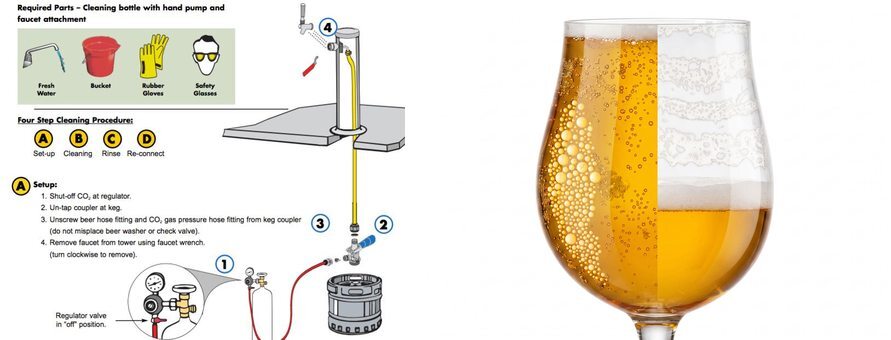
Left: what dirty lines do to every pour. Right: what clean lines deliver.
How Often Should You Clean Beer Lines?
Cleaning frequency comes down to how fast biofilm develops in your specific system. Volume, temperature, line length and beer style all factor in - but the Brewers Association 14-day standard exists because that is roughly when bacterial colonies begin accelerating beyond what a single cleaning can fully address. Go longer than two weeks and you are not saving time. You are compounding the problem.
Recommended cleaning schedule by system type:
| System Type | Recommended Frequency | Cleaning Type | Notes |
|---|---|---|---|
| Commercial Draft | Every 2 weeks | Alkaline (caustic) | Brewers Association standard |
| High-Volume Bars | Weekly | Alkaline (caustic) | Heavy throughput = Faster biofilm development |
| Home Kegerators | Every 2–3 weeks | Alkaline (caustic) | Or upon every keg change - Whichever comes first |
| Acid Wash (all systems) | Monthly / Quarterly | Acid cleaner | Removes beer stone that caustic cleaners cannot touch |
Home Kegerator Tip: Clean your beer lines every time you change a keg, or every 2-3 weeks, whichever comes first. Less volume means residue sits longer before the next clean.
Professional Draft Line Maintenance Methods
There are two main approaches to beer line cleaning: recirculation and static. Both work. The right one depends on your system size, line length and how much buildup you are dealing with.
Recirculation Method - Best for Long Draw Systems
A powered pump continuously circulates cleaning solution through the lines and back, creating a loop of sustained chemical contact. The constant movement generates turbulence that scrubs the line walls more aggressively than a static soak and reaches the full interior surface of the tubing on every pass.
- Superior for removing heavy or established biofilm
- Ideal for long draw systems in bars, restaurants and breweries
- Covers multiple lines simultaneously when set up in a loop
- Faster full-system clean when throughput is high and schedules are tight
Static / Pressurized Method - Ideal for Kegerators and Short Systems
A hand pump bottle or pressurized canister fills the lines with solution, which then sits and soaks for the recommended contact time. Less mechanical force than recirculation, but entirely sufficient for short line runs - and far simpler to set up and execute.
- The standard method for home kegerators and direct-draw coolers
- No powered pump required. A cleaning bottle or hand pump is all you need
- Works well for systems up to about 25 feet of line
- Faster setup and lower cost. The right choice for most home setups
At BeverageCraft you can choose between recirculation pumps and pressurized cleaning bottles depending on your system type and budget.
Step-by-Step Beer Line Cleaning Procedure
This procedure covers alkaline (caustic) cleaning, the bi-weekly standard for removing organic buildup. Always dilute your chosen solution according to the label. Concentration matters for both effectiveness and equipment safety.
Basic steps at a glance:
- Disconnect the keg
- Flush out remaining liquid with water
- Check connections and components
- Introduce alkaline solution
- Allow full contact time
- Rinse thoroughly with clean water
- Reattach the keg and test the pour
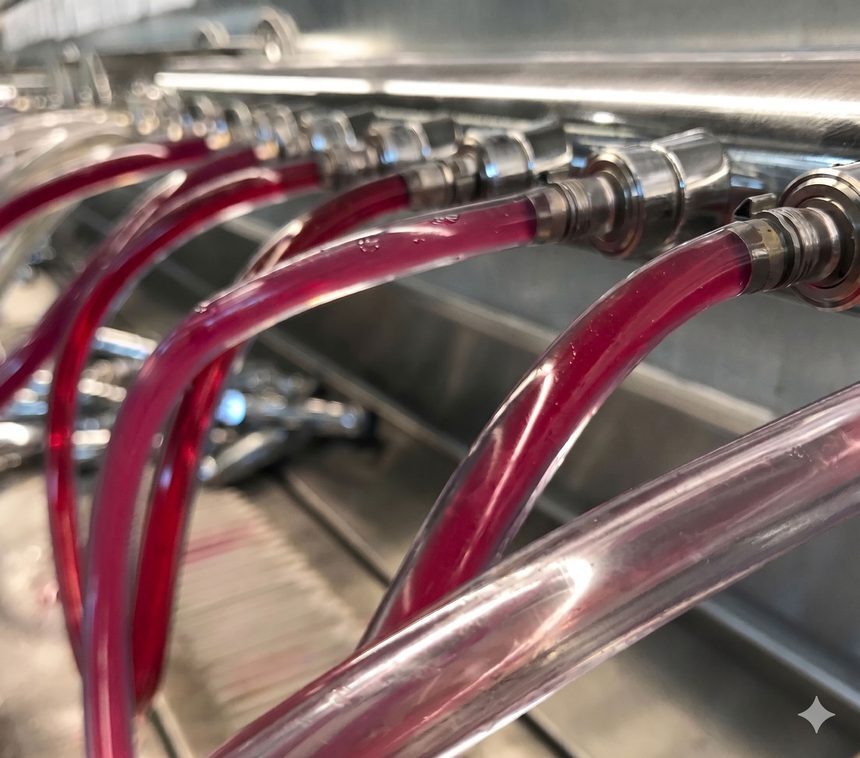
Full cleaning schedule reference:
| Step | Action | Frequency | Key Checkpoint |
|---|---|---|---|
| 1–2 | Disconnect keg, flush with water | Every clean | Flow runs clear before adding solution |
| 3 | Inspect all connections | Every clean | No leaks, no kinks in lines |
| 4–5 | Alkaline clean - 15-20 min contact | Bi-weekly | Full contact time: do not rush |
| 6 | Rinse to neutral pH | Every clean | 3–5 gallons per line minimum |
| Acid wash | Dissolve beer stone and mineral deposits | Monthly / Quarterly | Run after regular alkaline cycle |
| Faucet clean | Disassemble, brush and inspect washers | Weekly minimum | Replace any cracked or hardened washers |
Beer Stone: The Hidden Threat Inside Your Lines
Biofilm gets most of the attention in draft line maintenance conversations, but beer stone is the buildup that most operators do not realise they have until the damage is done. Unlike soft biological deposits, beer stone is hard - a chalky calcium oxalate crust that forms when minerals in beer react with proteins and bond permanently to the interior surfaces of lines, faucets and stainless steel components.
Regular caustic cleaners do not touch it. They are formulated for organic material, not mineralised crust. You can run a perfectly executed alkaline cleaning cycle on a system with established beer stone and come away thinking the job is done, while the stone continues to cause problems on every pour.
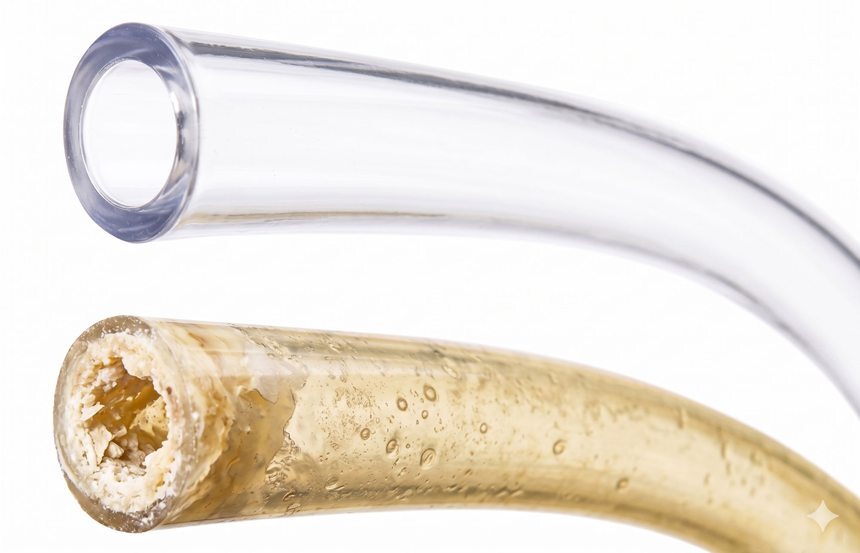
Clean line (top) vs neglected line (bottom) - the buildup causes off-flavours, foam and restricted flow.
Once beer stone takes hold, it does three things that compound over time:
- Creates a rough, porous surface that gives bacteria and biofilm something to grip, making future contamination worse and harder to remove with each cleaning cycle
- Contributes stale, metallic or chalky off-flavours that will not respond to a standard alkaline cleaning cycle no matter how many times you run it
- Flakes off into pours as visible particulate. That floating debris tells you a system has been neglected for a long time
An acid-based beer line cleaner - used at the manufacturer's recommended concentration - dissolves calcium oxalate without harming stainless steel, brass or plastic components. For most systems, a quarterly acid wash is sufficient. High-mineral water areas or high-volume systems benefit from monthly treatment.
Warning Signs Your Beer Lines Need Immediate Cleaning
Even on a regular schedule, systems can deteriorate faster than expected. If any of these show up, run a full cleaning cycle that day. Do not wait for the next scheduled date.
- Sour, buttery or vinegar-like flavours appearing across multiple beers on the same system
- Excessive foam or shifting head levels that pressure adjustments will not fix
- Unusually slow or inconsistent flow from the tap
- Faucets that are hard to open or feel sticky during service
- Visible film, discolouration or floating debris inside clear sections of tubing
- A chemical or soapy taste after a recent cleaning, which is almost always insufficient rinsing
Common Draft Beer Troubleshooting: Foam, Off-Flavours & Flow
Dirty lines are the most common cause of draft problems, but not the only one. Here is a fast diagnostic guide for the issues that come up most often behind the bar and in home kegerator setups.
Foam Problems
| Problem | Likely Causes | Fix |
|---|---|---|
| Too much foam | Beer too warm · System over-pressurised · Kinked or pinched lines · Dirty or partially blocked faucet · Uncooled tower sections | Target 36–38°F (2–3°C) · Adjust gas pressure for line length · Inspect lines for kinks · Clean and disassemble faucet · Check glycol chiller on long draw systems |
| Flat or no foam | Gas leak or empty CO2 cylinder · Regulator malfunction or wrong setting · Incorrect gas blend for the beer style | Check gas supply and all connections · Verify regulator pressure settings · Confirm correct CO2 or nitro blend for the beer |
Off-Flavours After Cleaning
| Problem | Likely Causes | Fix |
|---|---|---|
| Sour or vinegar taste remains | Persistent biofilm deeper in the system · Contamination in faucet internals · Beer stone giving bacteria a surface to grip | Recirculation clean at higher caustic concentration · Follow with acid cycle for beer stone · Fully disassemble and hand-clean faucet |
| Chemical or soapy taste | Cleaning solution not fully rinsed · Insufficient water volume used in rinse · Residue trapped in faucet or coupler | Rinse until pH matches incoming water · Use pH strips to confirm neutral rinse · Flush an extra 2–3 gallons and re-test pour |
Flow Problems
| Problem | Likely Causes | Fix |
|---|---|---|
| Poor or irregular flow | Protein or yeast blockage in the line · Damaged coupler, faucet or check valve · Beer stone restricting internal diameter over time | Inspect and clean faucet and coupler first · Run full recirculation cleaning cycle · Follow with acid wash · Replace lines if physical damage or permanent restriction is found |
Choosing the Right Beer Line Cleaning Products
The cleaner matters as much as the schedule. Using the wrong product, or the right product at the wrong concentration, leaves buildup behind even after a full cleaning cycle that looks correct on paper.
Alkaline (Caustic) Beer Line Cleaners
- Purpose: Remove organic soils: yeast colonies, hop resins, proteins and residual sugars
- Form: Liquid concentrate or powder, diluted with cold to lukewarm water
- Typical dosage: 1-3 oz per gallon. Always follow the label on your specific product
- Use on: Beer lines, faucet internals, tap towers and keg couplers when detached
Acid Beer Line Cleaners
- Purpose: Dissolve beer stone and mineral deposits that caustic cleaners cannot remove
- Frequency: Monthly to quarterly, always run after a completed alkaline cycle
- Compatibility: Confirm the product is rated safe for stainless steel and brass before use
| Cleaner Type | What It Removes | Frequency | Dosage |
|---|---|---|---|
| Alkaline / Caustic | Yeast, proteins, hop resins, sugars (organic soils) | Bi-weekly | 1–3 oz per gallon of water |
| Acid Cleaner | Beer stone, calcium oxalate, mineral deposits | Monthly / Quarterly | Per manufacturer label (stainless steel safe) |
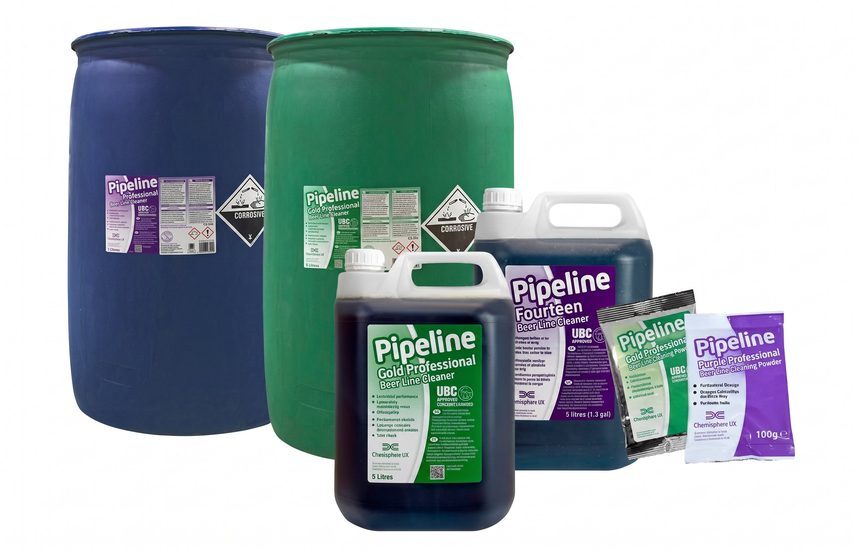
Pipeline Beer Line Cleaning range - caustic and acid cleaners in all sizes for commercial and home systems.
Beer Line Cleaning Tools and Kits
For a complete cleaning, you need more than solution. Here is the minimum equipment for an effective draft line maintenance routine:
- Beer line cleaning pump (recirculation) or pressurized cleaning bottle (static)
- Alkaline beer line cleaner for bi-weekly cycles (caustic)
- Acid cleaner for quarterly beer stone removal
- Faucet brush and detail brushes for cleaning internal faucet passages
- Coupler cleaning adapter to connect the cleaning setup to the beer line
- Basic tools: faucet wrench and spanner for disassembly
- Personal protective gear: gloves and eye protection when handling caustic solutions
BeverageCraft's beer line cleaning kits bundle the most commonly needed items - pump or bottle, hoses, brushes and cleaner - so you can get set up without hunting for individual parts.
Draft System Hygiene and Long-Term Maintenance
Beer line cleaning handles the chemistry inside your lines. A fully dialled-in draft system also requires attention to three other areas: temperature control, component condition, and the people operating it.
Temperature and Cooling
The target serving temperature is 36-38°F (2-3°C). Below that and carbonation drops out of solution; above it and biofilm grows faster, carbonation becomes unstable, and foam problems appear that cleaning alone cannot fix. Warmer storage does not just affect flavour. It shortens the safe interval between cleanings.
The most overlooked temperature problem in draft systems is the uncooled section between the keg and the tower. That stretch of line sits at room temperature and is responsible for more persistent foam complaints than any other single factor. Insulate it, or actively chill it. On long-draw systems, the glycol chiller needs the same maintenance attention as the lines themselves. Spotless lines running through a failing chiller will still produce bad beer.
FAQ | Beer Line Cleaning FAQ
Beer Line Cleaning Supplies from BeverageCraft
Every bar, taproom and home kegerator is different. The system size, the line length, the water mineral content, the volume poured each week - all of it affects how quickly buildup develops and what products will clear it most effectively. What does not change is the chemistry involved and that is what BeverageCraft is built around.
We supply commercial-grade caustic and acid cleaning solutions, complete cleaning kits with everything bundled together, recirculation pumps and pressurized cleaning bottles for every system type and faucet brushes and cleaning tools for the detail work that gets missed. When cleaning is no longer enough, we also carry replacement lines, faucets, couplers and seals.
The difference between a great pint and a disappointing one is rarely the keg. It is almost always what happens between the keg and the glass. That gap is yours to control.
BeverageCraft carries the full range of professional beer line cleaning supplies. Fast shipping across Canada and the USA.
Shop All Beer Line Cleaning Supplies