ChemSan vs. Star San: A No-Rinse Sanitizer for Brewery Equipment
Posted by Ron on 18th Aug 2026
If you run a brewhouse, brewpub or homebrew setup, you already know that sanitizing is the step that decides whether a good batch stays good. ChemSan is a no-rinse acid sanitizer built for exactly that job, and it's become a common question among brewers who want a ChemSan brewery sanitizer that works alongside their existing cleaning routine without adding a rinse step. This article explains what ChemSan is, how it differs from cleaning products, how it stacks up against Star San based on verified manufacturer information and where it fits in a working brewery.
What Is ChemSan?
ChemSan is an acid-based sanitizer from Chemisphere for brewing equipment and general surface sanitizing. It's a blend of phosphoric acid, benzenesulfonic acid, and isopropanol, diluted at 0.2 percent (10 ml per 5 litres of water). At that dilution it doesn't need rinsing after a two-minute contact time, and it self-foams to help hold contact on vertical surfaces.
Cleaning and Sanitizing Are Two Different Steps
It's worth being direct about something brewers sometimes gloss over: cleaning and sanitizing are not the same task, and ChemSan is only designed to do one of them. Cleaning removes visible soil, protein and beerstone using a detergent or alkaline wash. Sanitizing reduces microbial contamination on a surface that's already clean. Chemisphere's own product documentation is explicit on this point, recommending a dedicated cleaner (they suggest their Chemclean product) to fully clean equipment before ChemSan is applied.
The practical routine is simple:
ChemSan Brewery Sanitizer: Key Benefits
Based on Chemisphere's technical data sheet, here's what a properly diluted ChemSan solution offers:
No Rinse Required
At the prescribed 0.2 percent dilution, no rinse is needed after the two-minute contact time. Higher concentrations do require a potable water rinse.
Self-Foaming
Clings to surfaces rather than sheeting off, which is useful on tank walls, fittings, and threaded connections.
Broad Compatibility
Works on fermenters, kegs, tanks, bottles, beer lines and other stainless and plastic brewing hardware.
Concentrated Formula
One 250 ml bottle makes up to twenty-five 5-litre batches of working solution at the standard dilution.
Flexible Application
Apply by immersion, spray bottle, or wiping with a cloth, mop, brush or sponge.
2-Minute Contact Time
After the minimum contact time, drain the solution and let the surface air dry.
ChemSan vs. Star San: What the Manufacturer Data Shows
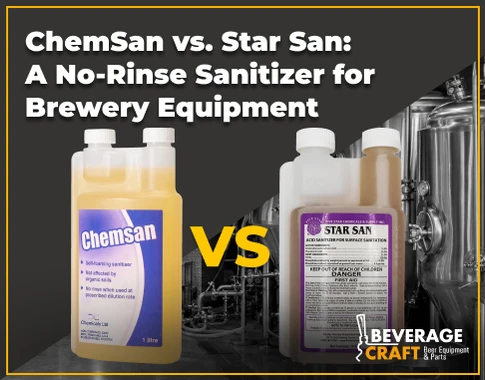
Both ChemSan and Star San are acid-based, self-foaming, no-rinse sanitizers, and they get used for similar jobs in breweries and homebrew setups. Rather than argue one is better, it's more useful to line up what each manufacturer actually publishes about their product so you can decide what fits your workflow.
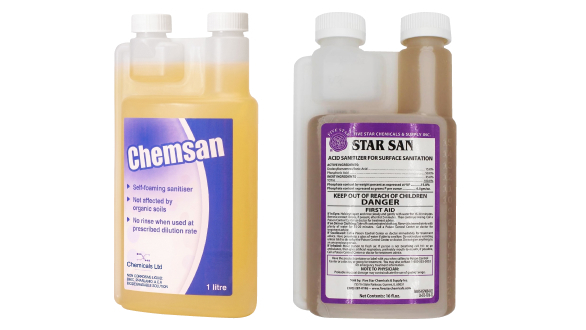
ChemSan and Star San - both acid-based, self-foaming, no-rinse sanitizers, compared on manufacturer-published specs below.
| Feature | ChemSan (Chemisphere) | Star San (Five Star Chemicals) |
|---|---|---|
| Active ingredients | Phosphoric acid, benzenesulfonic acid, isopropanol | Phosphoric acid, dodecylbenzenesulfonic acid |
| Dilution rate | 0.2%, or 10 ml per 5 litres of water | 1 oz per 5 gallons of water |
| Minimum contact time | 2 minutes | 1 to 2 minutes |
| Rinse required | No, at the recommended dilution | No, at the recommended dilution |
| Self-foaming | Yes | Yes |
| Mixed solution shelf life | Several days, provided pH stays at 3.5 or below | Manufacturer recommends using within about an hour of mixing |
| Soft metal caution | Not recommended for soft metals due to its acid content | Manufacturer advises caution on soft metals, rubber and plastic |
| Smallest retail size | 250 ml (up to 25 batches of 5-litre solution) | 32 oz |
The figures above come from each manufacturer's own product documentation: Chemisphere's ChemSan information sheet and Five Star Chemicals' published instructions and spec sheet for Star San. If you're currently a Star San user, ChemSan is worth knowing about as an alternative with a similar use profile, particularly the smaller 250 ml size and the longer working-solution life. Whether it's the right swap for your operation depends on your equipment, your regional supplier and your own testing.
Why ChemSan Is Not Recommended for Soft Metals
Where Craft Breweries and Homebrewers Use ChemSan
ChemSan's dilution rate and small bottle size make it practical across a range of setups:
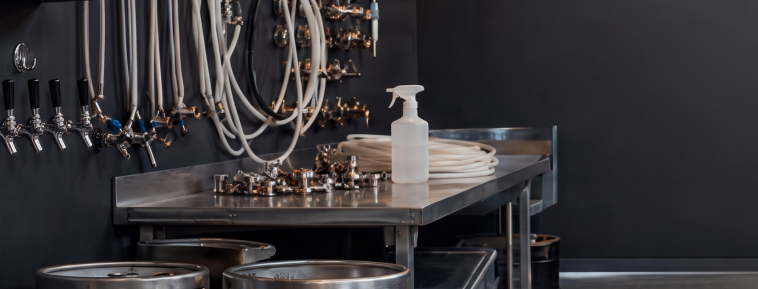
A sanitizing station set up in a brewery keg room, ready for the final no-rinse step after cleaning.
Craft Breweries & Brewpubs
Use it as a final sanitizing step on fermenters, brite tanks, and transfer lines after a full clean-in-place cycle, and on kegs before filling.
Homebrewers
Get a lot of mileage out of one bottle since 250 ml makes up to twenty-five 5-litre batches, enough to sanitize carboys and kegs, bottles, airlocks and small tools across many brew days.
Wineries & Other Producers
Apply the same no-rinse, self-foaming approach to tanks, hoses, and bottling equipment where minimizing water use and downtime matters.
Draft System Technicians
Use it between jobs on faucets, couplers, and other hardware that's already been cleaned.
Ready to switch to a no-rinse sanitizer?
Shop ChemSan Beer System Cleaner & Surface Sanitizer, 250 ml - self-foaming, no rinse, available from BeverageCraft.